· By Mara Quill · 1 min read
Inside the ageing room
What 35 days against a wall of salt does to a sirloin, and why a fifth of it never reaches the plate.
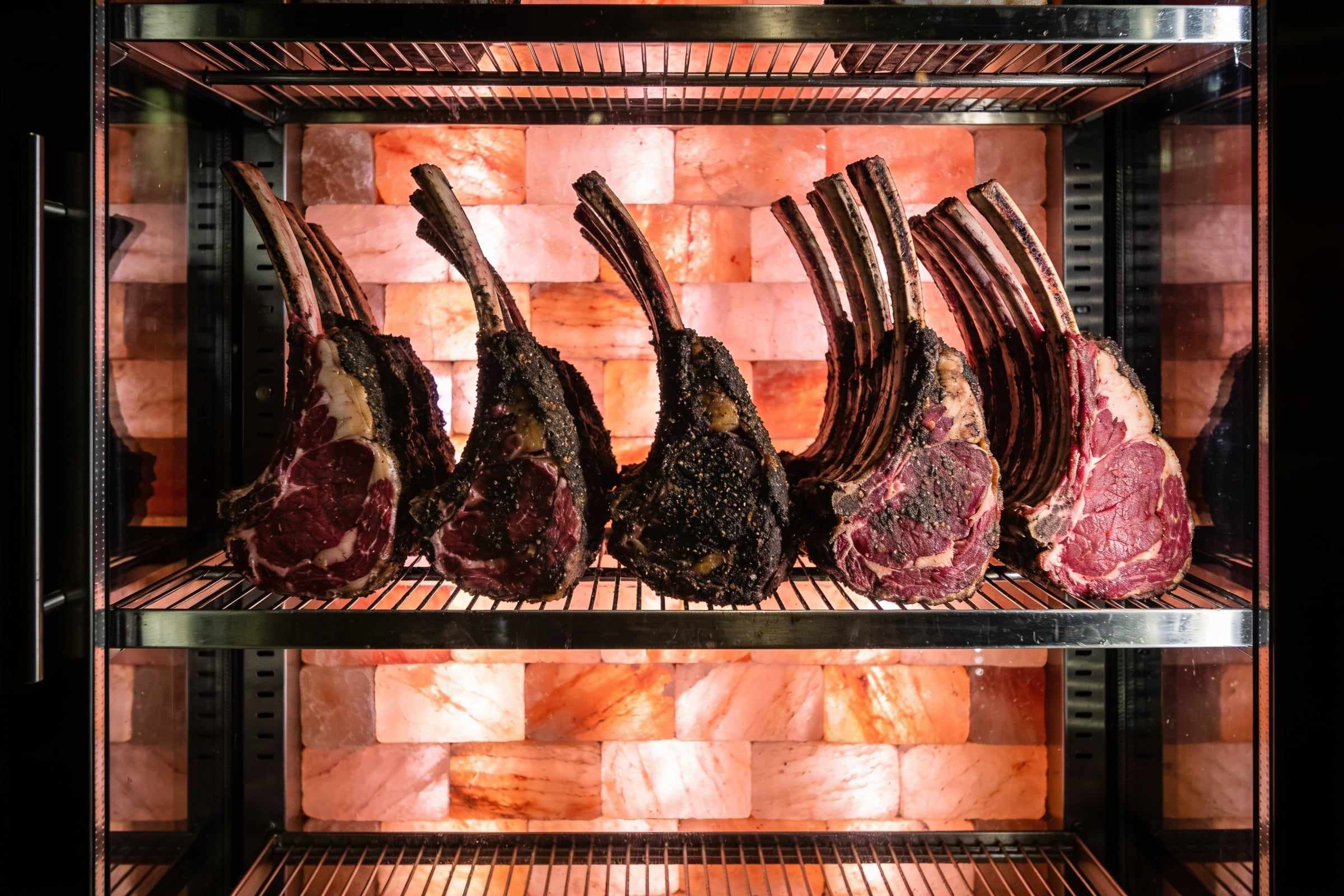
Behind the pass there’s a glass door, and behind it a room kept at 2 °C and 80% humidity, with a fan that never stops and a wall of salt blocks that glows pink when the light’s on.
Every Monday a delivery comes from Low Cleave Farm: whole ribs and sirloins on the bone, cut from steers that grazed the water meadows nine miles from here. They go onto the racks with a tag and a date, and then we leave them alone.
What happens in there
Three things, slowly. Water leaves the meat, so the flavour concentrates. The meat’s own enzymes break down the muscle, so it gets more tender. And on the outside, a dark crust forms that protects the meat underneath and gives the room its smell: nutty, a little like blue cheese.
What it costs
By day 35 a rib has lost about a fifth of its weight, and the crust has to be trimmed away. That’s why an aged steak costs more: you’re paying for the weight that isn’t there.
Why 35 days
We’ve tried 21, 45 and 60. At 21 days the beef is tender but tastes like good beef. At 60 it tastes like cheese. Thirty-five is where it still tastes of the farm, only more so. The côte de boeuf gets 45, because it’s a big cut and can carry it.